
Floatmeal: Turning the World's Smallest Plant into the Future of Sustainable Protein
Moana Kitamura
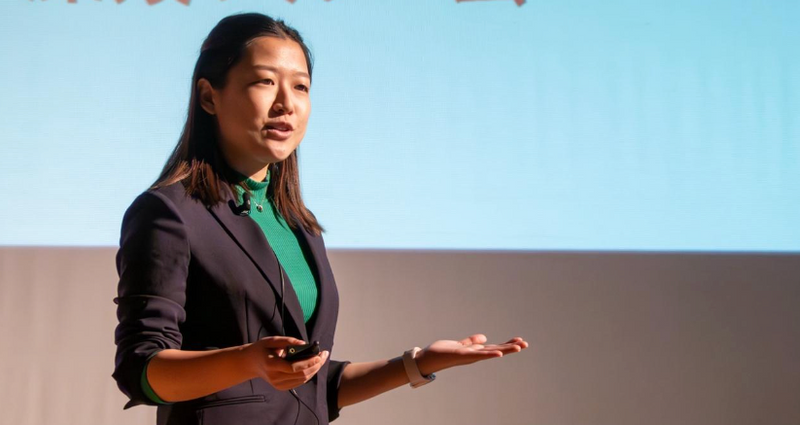
Floatmeal is a Japan based deep tech agrifood startup developing sustainable protein from duckweed, specifically the fast growing aquatic plant wolffia. Originating from university research, the company combines biotechnology and cultivation technology to produce high protein ingredients that can be used by food companies as a next generation alternative to traditional protein sources. Because duckweed grows rapidly, requires relatively few resources, and contains up to around forty four percent protein, Floatmeal aims to create scalable and environmentally responsible nutrition solutions while addressing global challenges in food security and climate change. With that, let’s dive deeper into its mission and innovation with its CEO and Co-Founder, Moana Kitamura.
A Plant Smaller Than a Fingernail
At first glance, it looks insignificant. A tiny green speck floating on water, barely larger than a grain of sand. Yet inside this humble plant lies a possibility that could reshape how the world thinks about food.
This is duckweed, specifically a species called wolffia, and it sits at the center of the mission behind Floatmeal. The company was founded with a simple but ambitious vision. Provide sustainable nutrition for everyone, not just in Japan, but across the world.
Duckweed happens to be one of the fastest growing plants on Earth. Under the right conditions, it can double in size in just one and a half days. Even more surprising is what it contains. Gram for gram, the protein content can exceed that of soy, reaching as high as forty four percent. For a world struggling to feed a growing population while reducing environmental impact, that combination matters.
At Floatmeal, years of scientific research have turned this tiny plant into the foundation of a deep technology platform. The team uses specialized bacterial cultivation methods developed over more than fifteen years of research to grow duckweed more efficiently than traditional methods allow.
Their goal is not simply to grow it. It is to transform it into a new kind of ingredient for the global food system, supplying companies that want sustainable protein without sacrificing taste or scalability.
The Moment Climate Became Personal
The journey toward Floatmeal did not begin in a laboratory. It began in a classroom.
During her second year as a university student, Moana Kitamura attended a seminar that examined the relationship between climate change and global food systems. One statistic stayed with her long after the lecture ended. Nearly one third of global greenhouse gas emissions are connected to the way the world produces food.
It was the kind of realization that shifts perspective. The challenge suddenly felt personal.
A professor in that class pushed students to think not just about the scale of the problem, but about their role in solving it. The next generation, he reminded them, would live with the consequences of decisions made today. At that time, Kitamura did not yet have a solution.
Around the same period, she met a researcher, Dr. Sajjad Kamal Shuvro. Back in 2020, he was beginning his doctoral work on cultivating duckweed more efficiently. He invited her to join the student research project, “Floatmeal,” for a few months. It seemed like a simple opportunity to learn, but what began as a short collaboration slowly evolved into something more serious.
Over the next five years, the project grew alongside a deeper realization. If technology like this could scale, it might address a problem far larger than any individual effort. By the time Kitamura entered her master’s program, the idea had already taken root. That was when Floatmeal Ltd. co. was officially born.
Why This Tiny Plant Matters
For any new food to succeed, it must meet a simple requirement before anything else.
It must taste good.
Sustainability alone cannot convince people to change what they eat. Flavor matters just as much as environmental impact.
Duckweed offers a surprising advantage here. Unlike some alternative proteins that carry strong or unfamiliar flavors, duckweed has a mild profile. In many cases it resembles matcha, with a subtle aroma and gentle taste that blends easily into foods. That characteristic makes it easier to incorporate into products without overwhelming them.
But taste is only part of the story. Duckweed grows quickly, requires relatively little space, and offers exceptional nutritional density. These traits make it one of the most promising candidates for next generation protein production. For Floatmeal, the ambition is to position duckweed not as a niche superfood, but as a practical ingredient that food companies can integrate into everyday products.
When Research Meets the Real World
Turning a scientific discovery into a company is rarely straightforward.
Inside a laboratory, a breakthrough can feel complete. The technology works. The data is convincing. The research is published. But outside the lab, the world asks different questions.
Who will buy it? How much can you produce? Can you deliver it consistently?
Floatmeal quickly discovered that building a venture requires far more than research. The team had to leave the lab and start speaking directly with potential customers, particularly food companies interested in new protein ingredients. Those conversations revealed a new challenge.
Demand only becomes real when supply can meet it.
To move forward, the company had to scale production. That meant securing funding, expanding facilities, and developing operational systems far beyond what a research environment normally requires.
Each step involved risk. Yet each conversation with industry partners also helped refine the path forward.
Small Wins That Signal Momentum
For early stage deep technology companies, progress often appears in unexpected forms.
Instead of immediate sales, success can be measured in infrastructure and capability.
Floatmeal has already begun building the foundation for large scale production. In Hokkaido, the company operates several research sites including greenhouse facilities and hydroponic systems. But Hokkaido’s winters are harsh, and duckweed grows slowly in cold conditions. To overcome this limitation, the company expanded its operations to Aichi Prefecture, working with a local farmer to establish a new greenhouse research facility supported by a thirty million yen government grant.
The goal is to refine semi mass production technology before scaling even further.
Beyond Japan, Floatmeal has also begun preparing a mass production project in Thailand through a program supported by the Japan International Cooperation Agency. This initiative aims not only to expand production capacity but also to increase income opportunities for local duckweed farmers. Meanwhile the team itself continues to grow, transitioning from contract based collaborators to full time employees and building partnerships across multiple countries.
Beyond Food
While food remains the starting point, duckweed’s potential extends much further.
The plant can absorb nutrients such as ammonia from wastewater systems, making it useful for environmental management. In aquaculture, duckweed can help purify water while simultaneously becoming feed for fish, creating a circular production cycle. Floatmeal has already begun experimenting with these possibilities in Hokkaido through projects connected to salmon farming.
Looking further ahead, the same biological platform could lead to innovations in biofuel, bioplastics, and carbon credit systems tied to sustainable cultivation.
For Kitamura and her team, duckweed is not just a food ingredient. It is the starting point for an entire industry built around one remarkable plant.
A Global Impact
The long term vision behind Floatmeal stretches far beyond individual products or markets.
The company hopes to contribute to a measurable reduction in the greenhouse gas emissions connected to global food systems. Even a small shift in how protein is produced could have enormous environmental consequences. But the founders understand that no single company can achieve that transformation alone.
Building a sustainable food system requires collaboration between researchers, farmers, governments, and businesses around the world. Floatmeal’s ambition is to help catalyze that network. To bring together people who believe that solving climate challenges can also create new industries and opportunities.
And perhaps most importantly, to prove that a plant smaller than a fingernail might hold one of the biggest answers to the future of food.
-
Moana Kitamura is the CEO and Co Founder of Floatmeal, a Japan based agritech startup developing sustainable protein from duckweed. Born in New Zealand to Japanese parents and raised in Australia, she pursued her studies at Hokkaido University, where her exposure to climate change research sparked a deep interest in sustainable food systems. While at the university, she met researcher Kamal Sajjad, whose work on duckweed cultivation inspired the creation of Floatmeal in 2023 during her master’s studies. Driven by a passion for environmental sustainability and global food security, Kitamura is focused on scaling duckweed as a next generation protein source that can help reduce the environmental impact of the global food system.
Visit www.techshake.asia if you would like to know and connect more with Floatmeal.
Are you a startup, investor or corporation? Or do you just enjoy talking about startups? There are many ways that you can work with TechShake.
We’d love to hear from you!