
GRIP NUS: Turning Scientific Breakthroughs into Venture Ready Futures
Kevin Leung
GRIP NUS, or the Graduate Research Innovation Program, is a venture creation initiative under NUS Enterprise at the National University of Singapore designed to transform cutting edge academic research into deep tech startups. Launched in 2018, the program provides a structured and hands-on pathway for PhD students, researchers, and graduates to validate market demand, develop venture blueprints, and commercialize their inventions. Through industry mentorship, experienced venture architects, and access to Singapore’s broader startup ecosystem, NUS GRIP bridges the gap between laboratory breakthroughs and real world economic and societal impact. With that, let’s dive deeper into its mission and innovation with its Program Director, Kevin Leung.
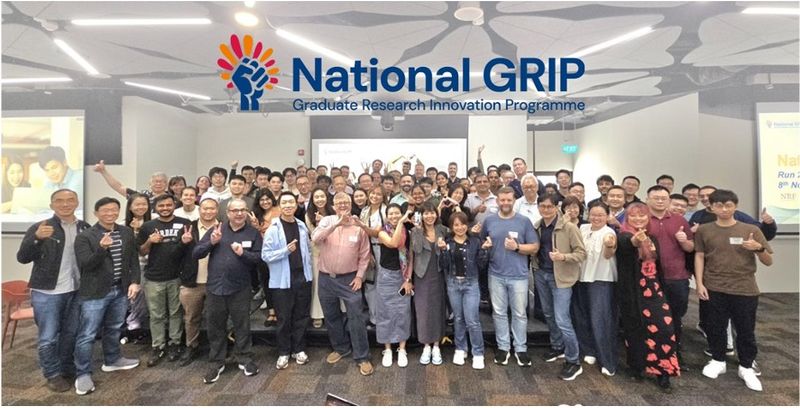
From Lab Bench to Launchpad
At the National University of Singapore, breakthroughs happen quietly. In laboratories filled with precision instruments and years of research, scientists push the boundaries of what is possible. Papers are published. Patents are filed. Rankings rise.
But somewhere between discovery and deployment, there has always been a gap.
The Graduate Research Innovation Program, known as GRIP, was created to close it. Established in 2018 under NUS Enterprise, the entrepreneurial arm of NUS, GRIP exists for one reason: to transform world class scientific research into venture ready startups.
NUS consistently ranks among the top universities globally, backed by deep investment in research. Yet for many scientists, translating a breakthrough into real world societal or economic impact is unfamiliar terrain. They are trained to prove hypotheses, not to pitch customers. To write journals, not business models.
GRIP steps into that space. Not as a classroom subject, but as a hands-on venture building journey.
When Scientists Become Founders
Most GRIP participants are PhDs and researchers. Many have never started a company. What they share is something powerful. A discovery that could change the world.
The journey begins with a shift in perspective. Instead of asking what did we invent, the question becomes what problem does this solve. It is a difficult starting point. As the program often describes it, it is like a hammer searching for its nail. In the first two months, participants leave the comfort of the lab and enter the marketplace. Customer discovery becomes their new experiment. They speak to industry stakeholders, potential buyers, and decision makers. They test assumptions. They listen.
Clarity begins to form.
From there, teams shape a venture blueprint. They define customers, sharpen value propositions, assess competition, and map a commercial pathway. This blueprint is evidence based, built on real conversations rather than theoretical optimism.
The next phase brings incorporation, technology licensing, and incubation. Along the way, scientists are supported by industry mentors known as commercial champions, seasoned venture architects with decades of entrepreneurial experience, and a structured system of weekly reviews. Not every team becomes a startup. Some discover the market is not ready. Some find the opportunity too small. But every participant leaves transformed, equipped with sharper judgment and a deeper understanding of how innovation meets reality.
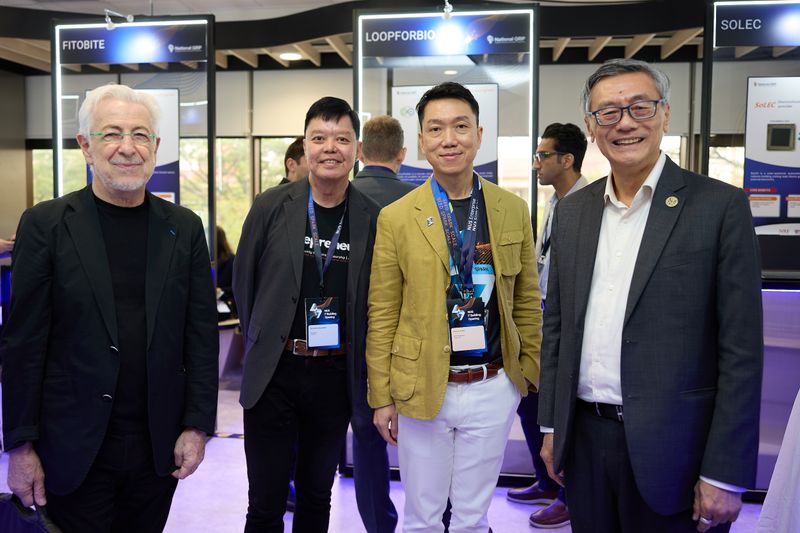
Measuring What Truly Matters
Startup formation and fundraising are visible markers of success. GRIP tracks them. Over the years, more than a hundred research based spinoffs have emerged. But these outcomes are viewed as effects, not causes.
The deeper measure of success lies in whether scientific breakthroughs achieve meaningful economic and societal impact. It lies in whether researchers evolve into capable entrepreneurs.
Building startups is difficult, especially for first time founders. Even when early ventures do not succeed commercially, the experience builds long term capability. GRIP sees value in the entrepreneurs it develops and in the ecosystem it strengthens, not just in the capital raised.
An Ecosystem Built With Intent
Singapore does not have the scale of Silicon Valley. It lacks vast domestic markets and sprawling supply chains. What it has instead is deliberate design.
Over more than two decades, NUS Enterprise has built an integrated innovation system. Education programs such as NUS Overseas Colleges send students abroad to immerse themselves in startup environments. Venture creation platforms like GRIP convert research into companies. Community hubs such as Block71 anchor startup clusters locally and internationally, with centers across Indonesia, China, Japan, Vietnam, and the United States. These pieces are designed to work together. Researchers are connected to market insight, entrepreneurial talent, and global access points.
Just as important is patience. Deep tech ventures take years to mature. The ecosystem is structured not for quick wins, but for long term capability building. That combination of structure, international reach, and sustained commitment makes it effective.
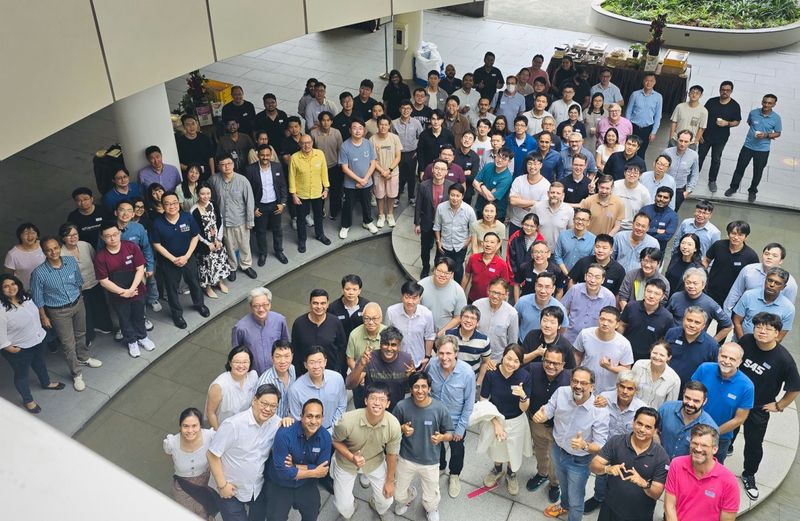
From University Program to National Platform
What began in 2018 as an NUS initiative has evolved. GRIP is now a national program supported by the National Research Foundation of Singapore and conducted in partnership with NTU. It is open not only to NUS researchers, but to public universities and research institutes across Singapore. This expansion allows cross pollination between institutions. Startups now emerge from multiple universities and research agencies, sharing resources and insight through a common platform.
The long term vision is clear: to make venture creation a credible and well supported career pathway for researchers. To produce not only high growth venture backed startups, but sustainable companies and founders who build enduring impact. Even those who experience failure carry forward lessons that strengthen the broader ecosystem.
Innovation Does Not Happen Alone
At the recent ASEAN Connect Webinar, one message stood out. Innovation does not have to happen in isolation.
Singapore is often recognized as a headquarters hub for regional expansion. Less discussed is its strength in research and development. With significant national investment in R&D, companies and founders can tap into a deep reservoir of university born inventions.
Programs like GRIP offer structured pathways to explore these discoveries, validate market demand, and de risk innovation. For ASEAN founders, Singapore can serve not only as a launchpad for regional growth, but as a gateway to proven research ready to be commercialized.
The invitation is simple. The ecosystem is here. The research is here. The support is here.
All that remains is the decision to build.
-
Kevin Leung is the Program Director of the Graduate Research Innovation Program at NUS Enterprise, where he leads a flagship deep tech venture creation platform at the National University of Singapore. Since 2018, GRIP NUS has produced over 120 research based spinoffs and expanded into a national initiative supported by the National Research Foundation in partnership with NTU. A seasoned technopreneur, he previously co-founded ventures including Smartron5 and Drawcrowd and served as Partner at Moneta Capital Partners. He began his career at IBM Canada in technology and e-commerce consulting. He holds degrees from the University of Toronto and the Schulich School of Business at York University.
Visit www.techshake.asia if you would like to know and connect more with GRIP NUS.
Are you a startup, investor or corporation? Or do you just enjoy talking about startups? There are many ways that you can work with TechShake.
We’d love to hear from you!